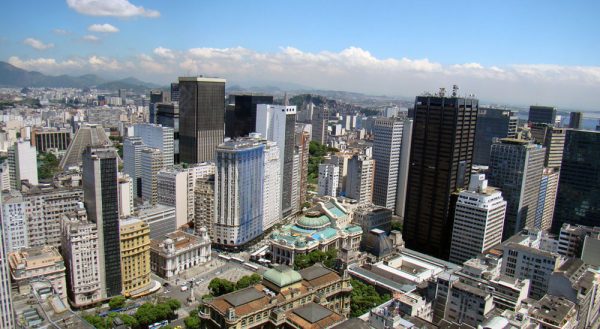
Rio de Janeiro is a city located between beaches, hills, historic neighborhoods and areas that feel like entirely different cities.
That’s why crossing Rio is also part of the experience of getting to know it. And for that, understanding public transportation in Rio de Janeiro can completely change your trip.
The metro, buses, BRT, VLT and trains connect different parts of the city and make it possible to reach many places that are part of everyday life in Rio.
It is true that the system may seem confusing at first, but in this guide, we explain everything you need to know about public transportation in Rio de Janeiro, so you can save time and explore the city with independence.
How does public transportation in Rio de Janeiro work?
Public transportation in Rio de Janeiro is made up of several systems that complement one another.
In practice, there is no single mode of transportation that will take you everywhere. The key is understanding which option makes the most sense for each journey.
The metro is the best option for traveling between the South Zone and Downtown, while the VLT (tram) makes it easier to get around Downtown and the Port Zone.
Then, BRT connects more distant areas, particularly in the West and North Zones.
And buses reach almost every neighborhood, while trains and ferries expand the possibilities for travelers heading to more distant areas or across Guanabara Bay.
This variety seem complicated, but it is also one of the defining features of such a large and diverse city.
What are the main types of public transportation in Rio de Janeiro?
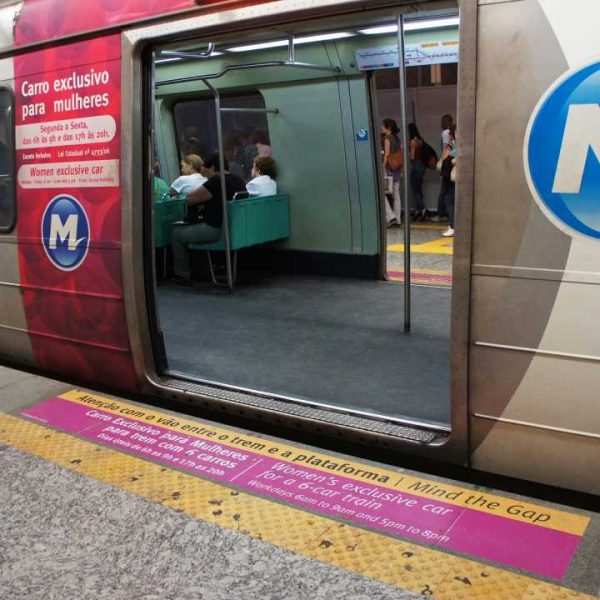
Metro
Fast and especially useful for traveling between Downtown, the South Zone and parts of the North Zone. The system has three lines and connects with other modes at strategic points.
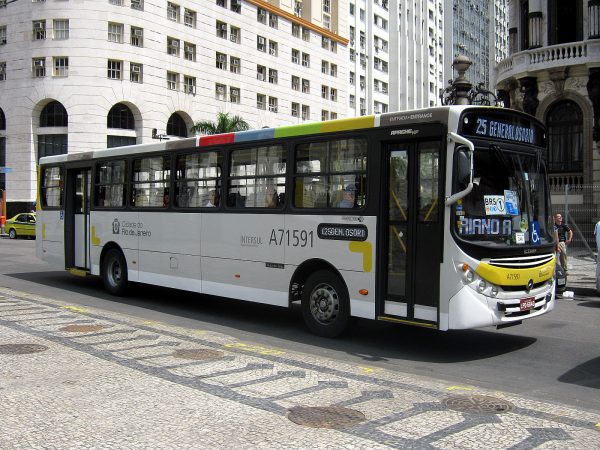
Buses
Essential for reaching areas that are not directly served by the metro or BRT. There are countless municipal routes and different itineraries.
BRT
Operates on dedicated lanes and connects important areas of the city, making it particularly useful for longer journeys.
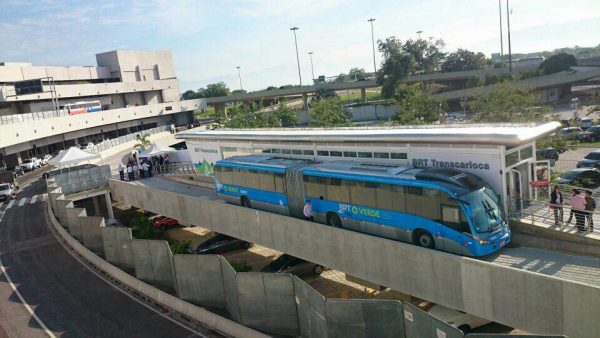
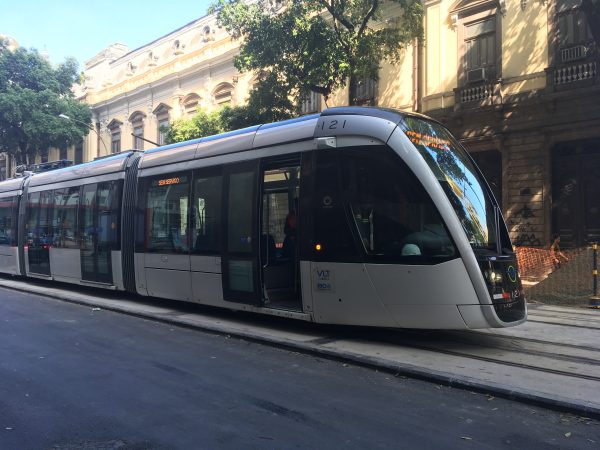
VLT
Operates mainly through Downtown and the Port Zone, passing places such as Praça XV, Carioca, Central do Brasil and Santos Dumont Airport.
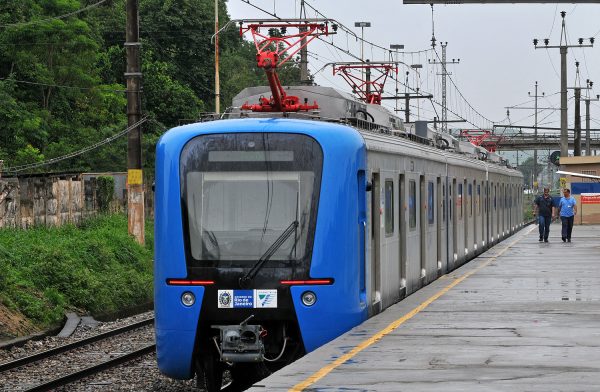
Trains
Connect Downtown to different areas of the North and West Zones and also serve municipalities in the Metropolitan Region.
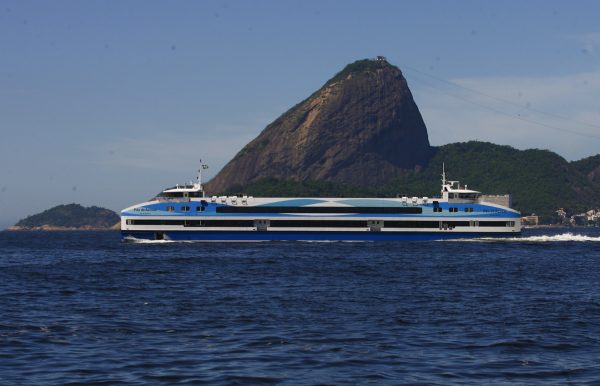
Ferries
Connect Rio de Janeiro with cities on the other side of Guanabara Bay, such as Niterói.
The best choice depends less on which mode is “better” and more on where you are, where you want to go and what time you plan to travel.
How much does public transportation cost in Rio de Janeiro?
One of the first questions about public transportation in Rio de Janeiro that visitors ask is: how much does public transportation cost in Rio de Janeiro?
In 2026, the standard municipal fare for buses, BRT and VLT is R$5.00. The regular MetrôRio fare is R$7.90.
However, the price of a journey may change when you use connections between different modes of transportation.
The Jaé fare system allows connections between buses, BRT and VLT according to the rules of the Bilhete Único Carioca.
Jaé can also be used on the metro, although the rules and prices for connections vary depending on the line and route.
For this reason, when planning your travel budget, it is worth considering not only the price of a single ride, but also how many journeys you will make each day and which modes you will use.
How to use public transportation in Rio de Janeiro
The first tip for public transportation in Rio de Janeiro is simple: do not try to memorize the entire system.
You do not need to know every bus route or remember the location of every station. Apps and maps can turn a huge transportation network into a much simpler journey.
To use public transportation in Rio, start by answering three questions:
Where are you?
Where do you want to go?
What time will you travel?
From there, check which combination of transportation modes makes the most sense.
MetrôRio, for example, offers an interactive map and a journey planner for routes between stations.
For municipal transportation, the Jaé app allows you to generate a QR code to pay for your ride by phone, check your balance and add funds using Pix or a credit card.
An important tip for travelers is to keep your phone charged. It may seem like a small detail, but when you rely on maps, transportation apps and QR codes, battery life is also part of your travel planning.
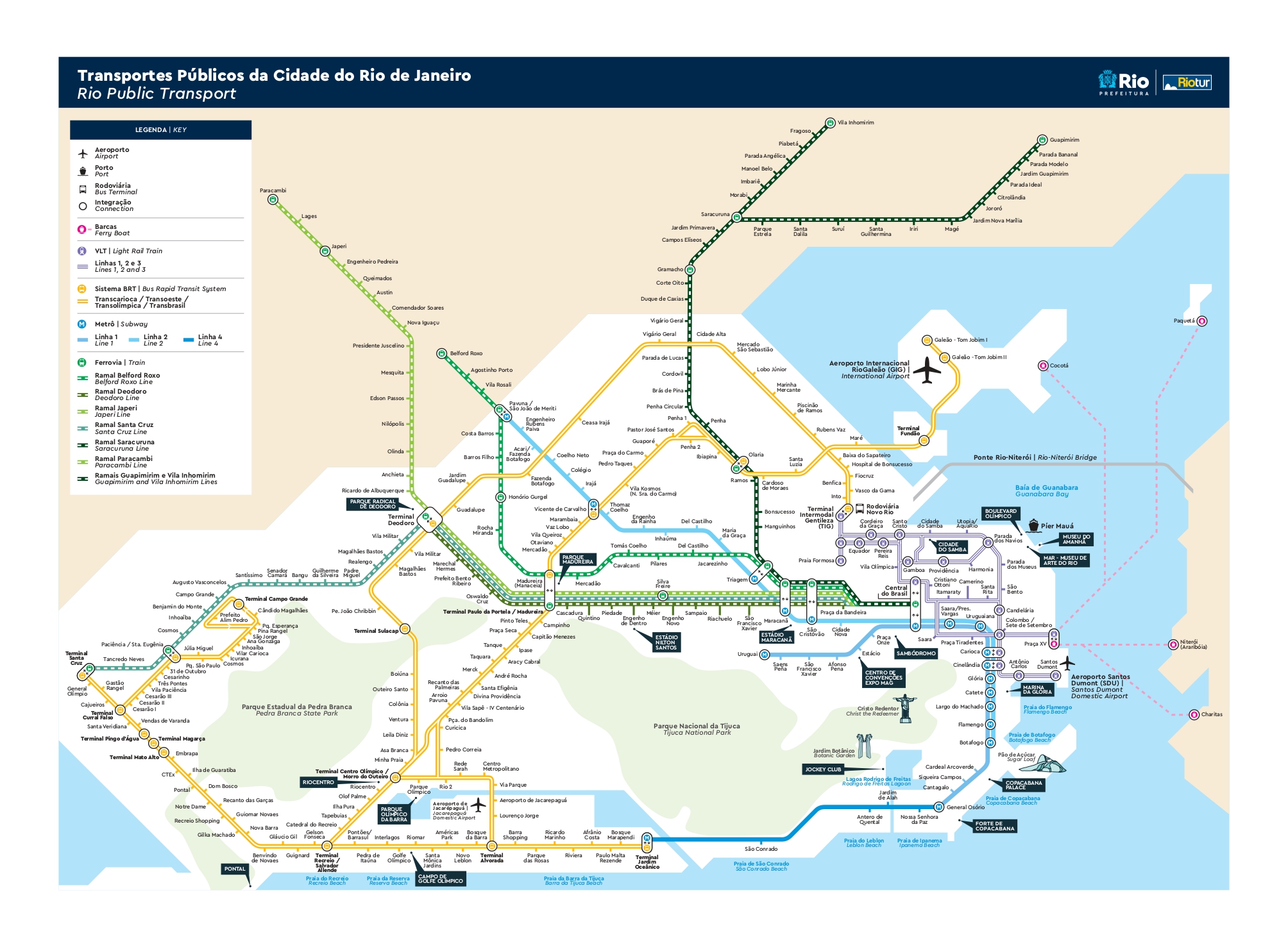
Rio de Janeiro public transportation map
When someone searches for a public transportation in Rio de Janeiro map, they may find several different maps. That is because the city has multiple systems that overlap and connect with one another.
The metro map is mainly useful for understanding journeys on the subway lines. Maps for the VLT, BRT, trains and buses show other parts of the network.
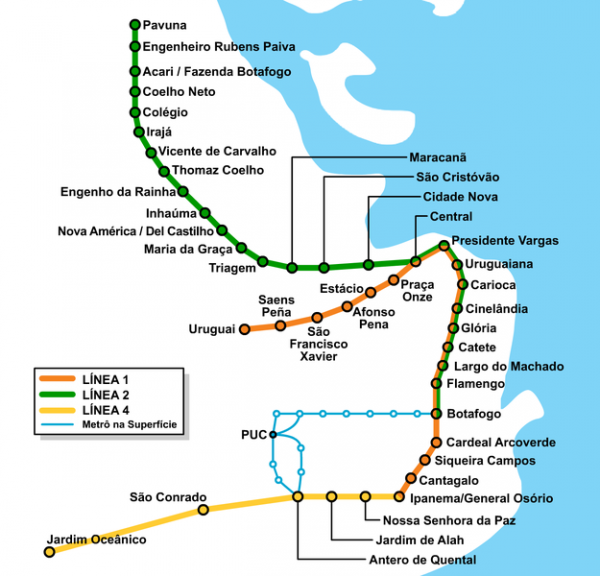
Instead of looking for one map that includes absolutely everything, it may be more useful to consult the map for the specific mode of transportation you plan to use.
For the metro, MetrôRio provides an interactive map and allows passengers to plan routes between stations.
The VLT also has its own maps of lines and stations, including routes through Downtown and the Port Zone.
There is also an important difference between looking at a map and understanding the city.
In Rio, a short metro ride followed by a walk may often be more interesting than trying to reach the exact entrance of an attraction by bus.
The city also happens along the way.
Public transportation during New Year’s Eve in Rio de Janeiro
Anyone planning to spend New Year’s Eve in the city should pay attention to one thing: public transportation in Rio de Janeiro operates differently during New Year’s Eve than it does on regular days.
During the celebrations, especially in Copacabana, special operations are created to manage the enormous flow of people.
During the 2026 New Year’s Eve operation, for example, MetrôRio adopted a special system between the night of December 31 and the early hours of January 1.
Access to the metro during part of that period required a specific pass with a preselected boarding time.
There were also changes to bus operations, street closures and the functioning of some stations.
Therefore, if you plan to spend New Year’s Eve in Rio, do not plan your journey based on the regular public transportation schedule.
The rules may change every year. Always check the official transportation operation announced for the specific edition of the celebration before leaving.
Is public transportation in Rio de Janeiro safe?
As in any major city, using public transportation requires awareness.
That does not mean you should avoid it. On the contrary, the metro, buses, VLT, BRT and trains are part of everyday life in Rio and are used by thousands of people every day.
For travelers, a few simple habits can help:
- avoid displaying your phone and other valuables;
- keep your belongings close to you;
- choose busy routes whenever possible;
- check your destination before boarding;
- be especially attentive when getting off at night;
- if you are unsure, ask station staff or use official apps.
It is also worth remembering that safety is not only about choosing a mode of transportation, but also about understanding the context of your journey.
The time of day, the area, street activity and number of people around you can significantly affect the experience.
How should you choose the best transportation for exploring Rio?
The truth about public transportation in Rio de Janeiro is there is no single type of public transportation that is ideal for every itinerary.
If you are in the South Zone and want to reach Downtown, for example, the metro could be the best option.
To explore the Port Zone and parts of Downtown, the VLT can make getting around much easier.
For more distant areas or places connected by express corridors, the BRT may be more convenient, and in many situations, the best is just walking.
This may be one of the most interesting ways to experience Rio because when you leave a station and start walking, you stop seeing the city only as a collection of destinations.
You pass a bakery, a square, a newsstand, a residential street or a neighborhood shop. You notice different rhythms and scenes that rarely appear on a traditional tourist itinerary.
One way to explore Rio de Janeiro with purpose is through our tours.
The Free Walking Tour of Downtown Rio de Janeiro is a great place to start. Along the way, you’ll visit some of the most important places in the history of Brazil and the city itself.
All of this with a guide who knows not only the major historical events, but also the details and stories that can make your experience of Rio much richer.
Public transportation is also a way to experience the city
There is a difference between crossing a city and actually being in it.
When you travel only by car or ride-hailing app, you often see Rio through a window. Public transportation changes that relationship.
You share space with local residents, watch neighborhoods change outside the bus window, cross different landscapes on the metro and walk through the streets between one stop and the next.
This does not mean that every journey needs to become a sightseeing experience. Public transportation exists, first and foremost, for the people who live in the city.
But precisely because of that, it can offer visitors a more everyday and less filtered perspective of Rio.
This perspective also fits a more conscious way of traveling: using the infrastructure that is already part of local life, walking whenever possible and allowing the city to be more than a backdrop for photographs.
Conclusion
Understanding public transportation in Rio de Janeiro means understanding a little of the city itself.
Rio is large, diverse and full of contrasts. Its neighborhoods have different rhythms, and its transportation systems reflect that complexity.
At first, it may seem necessary to learn many rules. But you do not need to master the entire network before you begin.
Choose your starting point, identify your destination, check the route and go.
And whenever possible, leave a few minutes to walk.
Because part of the Rio you came to experience may not be at the station where you arrive. It may be along the way between one place and another.
FAQ: Public Transportation in Rio de Janeiro
How much does public transportation cost in Rio de Janeiro?
In 2026, the standard municipal fare for buses, BRT and VLT is R$5.00. The regular MetrôRio fare is R$7.90. Connections may have specific prices depending on the mode of transportation and the route.
What is the best public transportation for tourists in Rio de Janeiro?
It depends on your itinerary. The metro is very useful for connecting Downtown with the South Zone and other areas of the city. The VLT is especially convenient for getting around Downtown and the Port Zone. Buses and BRT serve different regions and can complement your journey.
How do you pay for public transportation in Rio de Janeiro?
The Jaé system allows passengers to pay for municipal transportation with a card or a QR code generated in the app. Jaé is accepted on buses, BRT, VLT and other municipal transportation services, as well as on the metro according to the system’s rules.
Is there a public transportation map for Rio de Janeiro?
There are specific maps for each mode of transportation. MetrôRio provides an interactive map with journey planning, while the VLT has its own maps of lines and stations.
Does public transportation operate during New Year’s Eve in Rio?
Yes, but with special operations. During New Year’s Eve, especially in Copacabana, there may be changes to schedules, stations, access procedures, bus routes and street closures. It is important to check the official operation for the year of your trip.
Is it easy to use public transportation in Rio de Janeiro?
Once you understand the main modes of transportation and learn how to check routes, the system becomes easier to use. Apps such as Jaé and the official MetrôRio tools can help you plan your journeys.
Is public transportation worth using to explore Rio?
For many journeys, yes. In addition to being a practical way to get around the city, public transportation allows you to experience Rio from a more everyday perspective and get closer to local life.