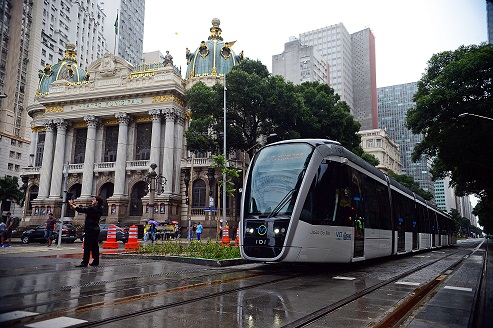
If you’re looking for things to do in Rio de Janeiro Downtown , you’ll probably come across lists of churches, museums, historic buildings, and squares.
And yes, all of these are part of the area. But Rio’s Downtown is also home to places that don’t fit neatly into a typical tourist itinerary.
This is where different chapters of Brazilian history unfolded.
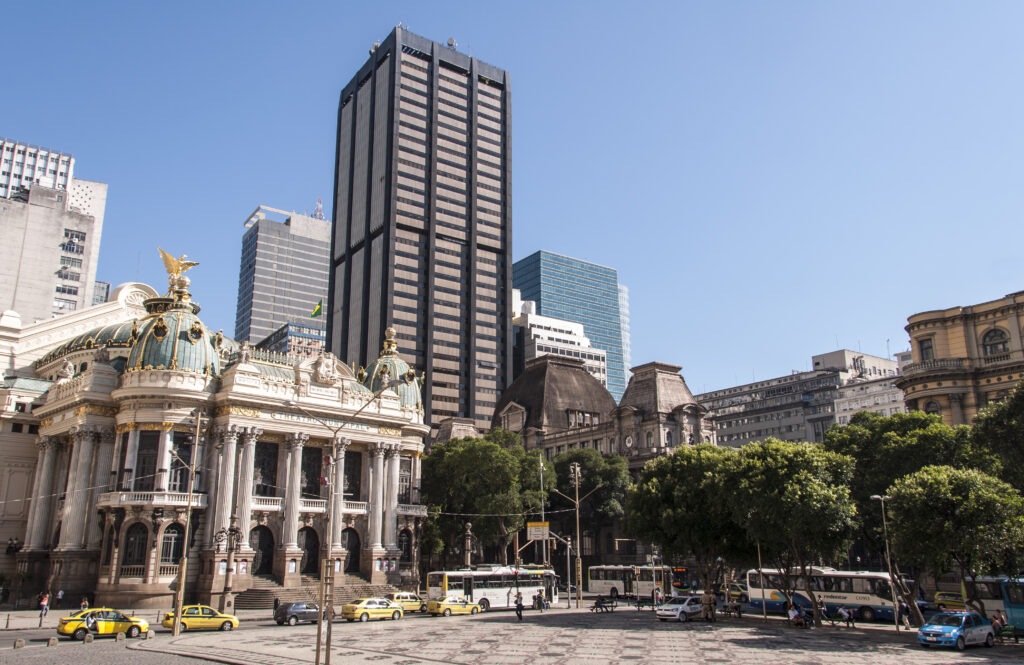
Buildings that were once symbols of power now share the streets with bars, restaurants, shops, art, and the everyday life of the people who pass through the area every day.
That’s why exploring Rio de Janeiro Downtown is also an opportunity to understand the city by walking through the places where history actually happened.
If you want to go beyond the obvious itinerary, keep reading. We’ve selected four places that can help you uncover some of these different layers of Rio.
What to Do in Rio de Janeiro Downtown
1. Discover Rio’s History at Confeitaria Colombo
A good place to start your tour on Rio de Janeiro Downtown is a place that is already well known among both locals and tourists: Confeitaria Colombo. Few places manage to bring together architecture, gastronomy, and history quite like this one.
Opened in 1894, it became one of the symbols of Rio’s Belle Époque.
Its architecture, inspired by 19th-century European cafés and salons, reflects the influence Europe had on the customs and aspirations of Rio’s elite at the time.
But there’s an even more interesting way to look at this place.
Instead of seeing it simply as a beautiful and traditional pastry shop, think about what it represents.
During this period, Rio was undergoing major urban and cultural transformations, and places like Confeitaria Colombo helped create a new image for the city.
Even the food tells part of this story. Portuguese and Brazilian sweets and recipes show how different cultures gradually came together and created new habits over time.
And perhaps that is one of the best ways to get to know a city: by realizing that its history also lives in what people eat, the places where they meet, and the traditions that remain.
Where to Eat in Downtown Rio de Janeiro?
Confeitaria Colombo is one of the most traditional places to eat in Rio de Janeiro Downtown while also getting a glimpse into the city’s history.
A visit can go beyond the food and become a cultural experience in itself. After all, when a place has witnessed more than a century of transformations in the city, sitting at one of its tables is also a way of observing the past.
2. Discover Another Side of History at Casa Tucum
There is an important question to ask when we talk about the history of Rio de Janeiro: who is telling the story?
Casa Tucum offers a chance to look at Rio de Janeiro Downtown from a perspective that has often been left out: the perspective of Indigenous peoples.
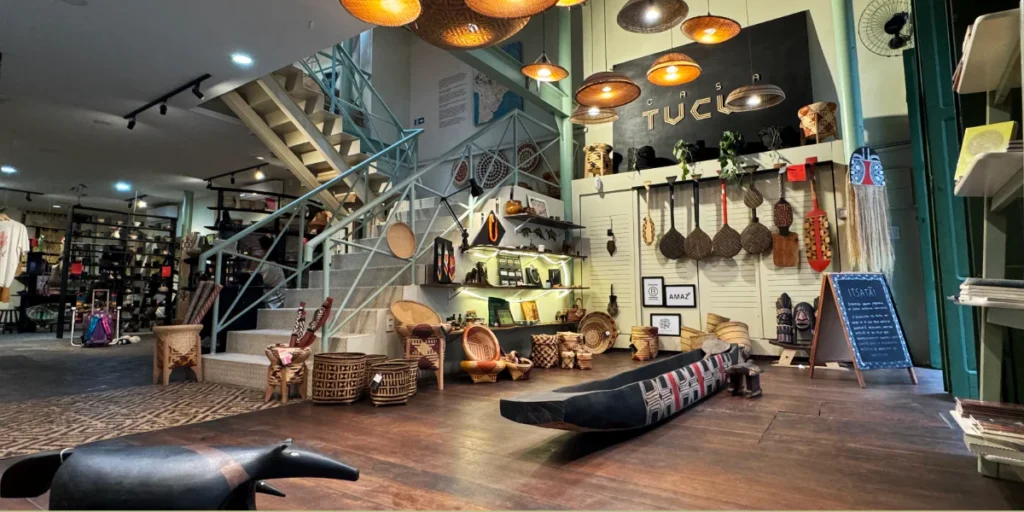
In the Free Walker itinerary, this stop has a special role because it helps broaden the narrative surrounding the formation of Rio.
Brazilian history has traditionally been presented from a predominantly European perspective. But this territory was already home to different Indigenous peoples long before the Portuguese arrived.
Discovering this other perspective adds another chapter to the story. More than that, it means questioning the way we have learned to understand the formation of Brazil itself.
This is where art also becomes a tool for resistance and for preserving knowledge. Casa Tucum becomes part of a larger experience: understanding that culture is not something frozen in the past.
It continues to be created, protected, and reinterpreted in the present.
For anyone looking for different places to visit in Downtown Rio de Janeiro, this is exactly the kind of stop that takes you beyond the usual tourist itinerary.
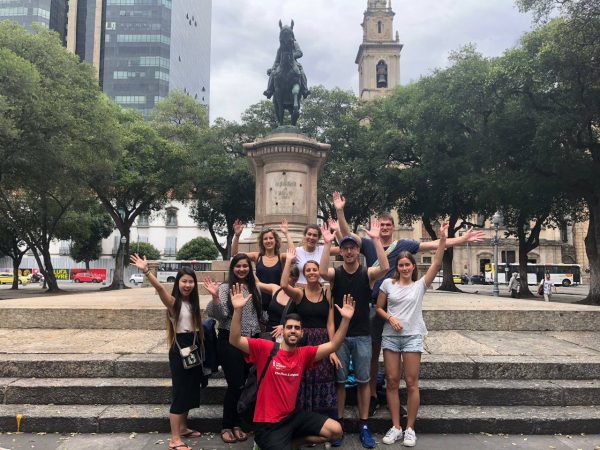
3. Step Back in Time While Walking Around Praça XV
As our third tip for understanding Rio de Janeiro Downtown, we recommend Praça XV, one of the few places that can help you visualize so many of the transformations the city has experienced.
As you walk around the area, you’ll find buildings and spaces connected to different moments in Brazilian history.
Here, you can see the former port area, historic churches, and the Paço Imperial, for example. Together, they reveal the importance Rio gradually assumed throughout the centuries.
These elements are what make Praça XV so interesting.
In Downtown Rio, you don’t necessarily have to enter a museum to find history. It is right there in the façades, squares, streets, and public spaces that continue to be part of the city’s everyday life.
Paço Imperial: Where Power Changed Addresses
At the heart of Praça XV stands Paço Imperial, one of the places that best helps explain why Rio de Janeiro Downtown has played such an important role in Brazilian history.
Its story goes back to 1808, when the Portuguese royal family arrived in Rio de Janeiro. The building was then used as a residence for the court and became one of the city’s main centers of power.
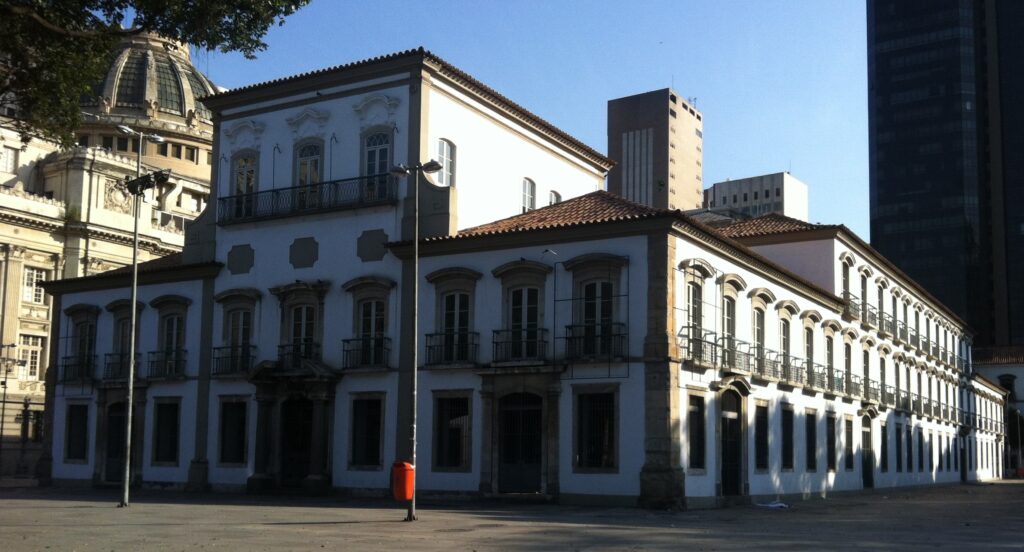
Important decisions were made here, and events that shaped the formation of Brazil unfolded within these walls.
But perhaps the most interesting thing is to notice the contrast between what Paço Imperial represents and what happens around it today.
Where members of the royal family and important political figures once walked, today you’ll find workers, residents, tourists, and people simply crossing the square as part of their daily routines.
4. Discover Cinelândia and Rio’s Cultural Side
If Praça XV helps us understand Rio’s political past, Cinelândia reveals another side of the city: its relationship with art, culture, and urban life.
The area became particularly prominent during the urban transformations of the early 20th century and developed into an important cultural hub.
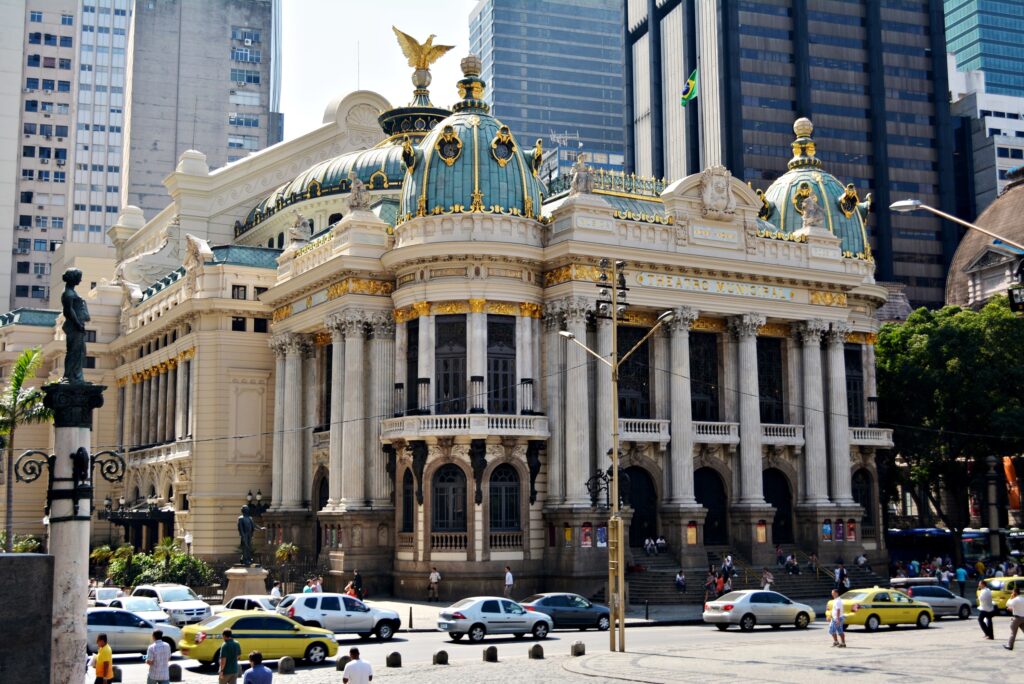
Its cultural importance grew as cinemas and theaters turned the area into one of the city’s major meeting points for decades.
Today, some of Rio’s most iconic buildings are still here.
The Theatro Municipal is perhaps the most prominent of them, standing out for its monumental architecture.
Nearby, the National Library preserves an enormous bibliographic and documentary collection, while the National Museum of Fine Arts completes this important cultural ensemble.
It is also worth mentioning that Cinelândia has been the stage for political events, demonstrations, and gatherings that are part of Rio’s public life.
Because of this history, it is also a place where culture and politics meet — and where you can see how urban spaces themselves become part of a society’s history.
What to See in Cinelândia?
Visitors can explore the area around the Theatro Municipal, the National Library, and the National Museum of Fine Arts, while also taking in the architecture of the square and the surrounding buildings.
It is a great area for anyone who wants to experience Rio de Janeiro Downtown from a perspective that combines history, art, and urban life.
What to Do in Rio de Janeiro on a Rainy Day?
Of course, many people come to Rio de Janeiro to enjoy sunny days, catch some waves at Copacabana Beach, or spend some time in Botafogo. But the weather can be unpredictable.
That doesn’t mean a rainy day has to be a wasted day in Rio.
There are still plenty of things to do in Downtown Rio.
To be honest, rain can even be a good opportunity to discover parts of the city that often take a back seat when the sun is shining.
When it rains in Rio de Janeiro, Downtown concentrates a variety of historical and cultural attractions that don’t depend on the beach or clear skies.
You can follow our recommendations and start with a coffee at Confeitaria Colombo, visit cultural spaces, admire the historic architecture, and explore areas such as Praça XV and Cinelândia.
And there is one additional advantage: Rio de Janeiro Downtown makes the most sense when explored on foot.
Even when the weather changes, walking through the streets and observing the relationship between historic buildings and the contemporary city remains one of the best ways to experience this part of Rio.
Why Visit Rio de Janeiro Downtown?
As you’ve seen throughout this article, Rio de Janeiro Downtown is much more than a concentration of old buildings.
Downtown Rio is a place where different versions of Brazil’s story come together.
Its architecture reveals European influences, especially in the city’s former centers of power.
But Europeans were not the only ones who shaped Brazilian culture. The histories of Indigenous peoples also challenge traditional narratives about the country’s formation.
The result of these cultural encounters can be seen in art, gastronomy, and the way people occupy the streets. And the contemporary city continues to transform all of these spaces.
That’s why exploring Rio de Janeiro Downtown can change the way you understand Brazil as a whole.
Instead of simply taking a photo of a building, you begin to understand why it is there. A street that once seemed like just another part of your route can suddenly take on a much deeper meaning.
Is It Worth Taking a Tour of Rio de Janeiro Downtown?
Rio de Janeiro Downtown is a public area, so you can visit many of these places on your own. But there is a difference between walking past a historic place and understanding what happened there.
On a guided tour, a local guide helps you connect places and stories that, at first, may seem unrelated.
A pastry shop can lead to the history of Rio’s elite. An art store can open up a conversation about Indigenous peoples. A square can reveal centuries of political transformations. A theater can tell the cultural story of a city.
That is the perspective behind the Free Walking Tour Downtown Rio de Janeiro, a free walking tour with some of the best reviews among guided tour platforms.
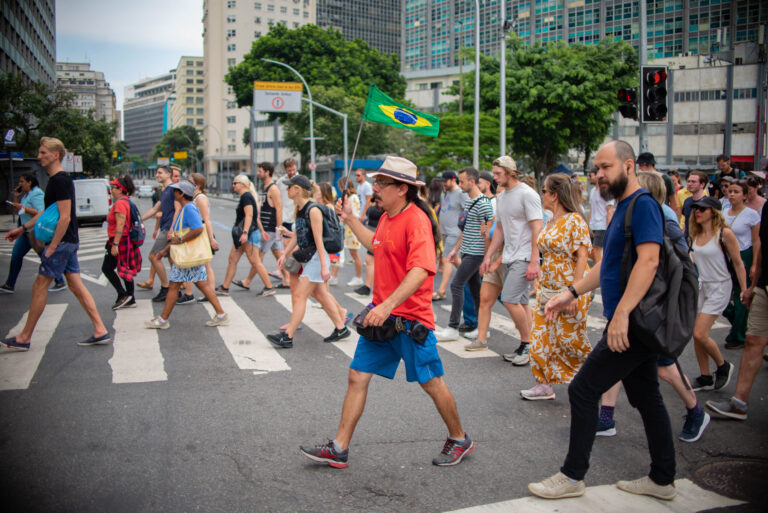
During our guided tour, you’ll spend approximately three hours walking through different parts of Rio Downtown with a local guide, exploring the history of Rio and Brazil through European, Indigenous, and African perspectives.
The goal is not simply to stop at monuments and explain what they are. The real focus is to help you understand the connections between them and see the city beyond the traditional tourist itinerary.
Conclusion
Perhaps the best answer to what to do in Rio de Janeiro Downtown isn’t a list of attractions.
From our perspective, the best thing you can do is simply walk.
All you need to discover Downtown Rio is enough curiosity to realize that a pastry shop can tell a story, a square can reveal the struggles that shaped a country, and an old building can still be part of the life of a city that never stopped changing.
Downtown Rio, despite its obvious beauty, requires a more attentive eye.
And once you begin to see its layers, Rio stops being just the city of beaches, Christ the Redeemer, and famous views.
It also becomes a city of stories, contrasts, cultures, and people — a city that invites you to understand something much deeper than you may have expected.
FAQ: Downtown Rio de Janeiro
What are the best things to do in Downtown Rio de Janeiro?
You can visit Confeitaria Colombo, Casa Tucum, Praça XV, Paço Imperial, Cinelândia, Theatro Municipal, the National Library, and several other historic and cultural sites. Taking a walking tour is also a great way to understand the connections between these places.
What can I do in Rio de Janeiro when it rains?
Rio de Janeiro Downtown is a great option for rainy days, especially if you want to explore cultural and historical attractions, visit Confeitaria Colombo, and discover the area through a guided itinerary.
Where can I eat in Downtown Rio de Janeiro?
Confeitaria Colombo is one of the area’s most traditional options, combining gastronomy with history and architecture.
What are the main tourist attractions in Downtown Rio de Janeiro?
Some of the best-known attractions include Confeitaria Colombo, Praça XV, Paço Imperial, Cinelândia, Theatro Municipal, and the National Library.
Can I explore Downtown Rio de Janeiro on foot?
Yes. Walking is one of the best ways to explore Rio de Janeiro Downtown, allowing you to experience its architecture, streets, squares, and different historical layers up close. The Free Walking Tour Rio de Janeiro Historic Center was designed specifically to introduce visitors to this part of the city through walking.
Is it worth taking a tour of Rio de Janeiro’s Historic Center?
If you want to understand the city’s history and culture beyond the most famous tourist attractions, a guided tour can make a big difference. The idea is to provide context and connect events and places that might otherwise go unnoticed when exploring the area on your own.